Day 39. Lent with the Cure d'Ars: Catechism on Salvation
by VP
Posted on Sunday June 05, 2022 at 12:00AM in Sermons
"There are many Christians who do not even know why they are in the world.
"Oh my God, why hast Thou sent me into the world?" "To save your soul. " "And why dost Thou wish me to be saved?" "Because I love you. "
The good God has created us and sent us into the world because He loves us; He wishes to save us because He loves us.
To be saved, we must know, love and serve God. Oh, what a beautiful life! How good, how great a thing it is to know, to love and serve God! We have nothing else to do in this world. All that we do besides is lost time. We must act only for God, and put our works into His hands. We should say, on awaking, "I desire to do everything today for Thee, O my God! I will submit to all that Thou shalt send me, as coming from Thee. I offer myself as a sacrifice to Thee But, O God, I can do nothing without Thee. Do Thou help me!"
Oh, how bitterly shall we regret at the hour of death the time we have given to pleasures, to useless conversations, to repose, instead of having employed it in mortification, in prayer, in good works, in thinking of our poor misery, in weeping over our poor sins; then we shall see that we have done nothing for Heaven. Oh, my children, how sad it is! Three-quarters of those who are Christians labor for nothing but to satisfy this body, which will soon be buried and corrupted, while they do not give a thought to their poor soul, which must be happy or miserable for all eternity. They have neither sense nor reason: it makes one tremble.
Look at that man, who is so active and restless, who makes a
noise in the world, who wants to govern everybody, who thinks himself of
consequence, who seems as if he would like to say to the sun, "Go away,
and let me enlighten the world instead of you." Some day this proud
man will be reduced at the utmost to a little handful of dust, which
will be swept away from river to river, from Saone* to Saone, and at last
into the sea.(*French river)
See my children, I often think that we are like those little heaps of sand that the wind raises on the road, which whirl round for a moment, and are scattered directly. . . . We have brothers and sisters who are dead. Well, they are reduced to that little handful of dust of which I was speaking. Worldly people say, it is too difficult to save one's soul. Yet nothing is easier. To observe the Commandments of God and the Church, and to avoid the seven capital sins; or if you like to put it so, to do good and avoid evil: that is all. Good Christians, who labor to save their souls and to work out their salvation, are always happy and contented; they enjoy beforehand the happiness of Heaven: they will be happy for all eternity. While bad Christians, who lose their souls, are always to be pitied; they murmur, they are sad, they are as miserable as stones; and they will be so for all eternity. See what a difference!
This is a good rule of conduct, to do nothing but what we can offer to the good God. Now, we cannot offer to Him slanders, calumnies, injustice, anger, blasphemy, impurity, theaters, dancing; yet that is all that people do in the world. Speaking of dances, St. Francis of Sales used to say that "they were like mushrooms, the best were good for nothing. " Mothers are apt to say indeed, "Oh, I watch over my daughters." They watch over their attire, but they cannot watch over their hearts. Those who have dances in their houses load themselves with a terrible responsibility before God; they are answerable for all the evil that is done - for the bad thoughts, the slanders, the jealousies, the hatred, the revenge. . . . Ah, if they well understood this responsibility they would never have any dances. Just like those who make bad pictures and statues, or write bad books, they will have to answer for all the harm that these things will do during all the time they last. . . . Oh that makes one tremble!
See, my children, we must reflect that we have a soul to save, and an eternity that awaits us. The world, its riches, pleasures, and honors will pass away. Let us take care, then. The saints did not all begin well; but they all ended well. We have begun badly; let us end well, and we shall go one day and meet them in Heaven"
Source: The Blessed Curé of Ars in His Catechetical Instructions (1951)
Day 21. Lent with the Cure d'Ars: On Impurity
by VP
Posted on Sunday June 05, 2022 at 12:00AM in Sermons
"That we may understand how horrible and detestable is this sin, which the demons make us commit, but which they do not commit themselves, we must consider what a Christian is... A Christian, created in the image of God, redeemed by the Blood of a God! a Christian, the child of God, the brother of a God, the heir of a God! a Christian, the object of the complacency of the Three Divine Persons! a Christian, whose body is the temple of the Holy Ghost; that is what sin dishonors.
We are created to reign one day in heaven, and if we have the misfortune to commit this sin, we become the den of the devils. Our Lord said that nothing impure should enter into His kingdom. Indeed, how could a souls that has rolled itself in this filth go to appear before so pure and so holy a God?
We are all like little mirrors, in which God contemplates Himself. How can you expect that God should recognize His likeness in an impure soul?
There are some souls so dead, so rotten, that they lie in their defilement without perceiving it, and can no longer clear themselves from it: everything leads them to evil, every thing reminds them of evil, even the most holy things; they always have these abominations before their eyes; like the unclean animal that is accustomed to live in filth, that is happy in it, that rolls itself and goes to sleep in it, that grunts in the mud; these persons are an object of horror in the eyes of God and of the Holy angels.
See, my children: our Lord was crowned with thorns to expiate our sins of pride; but for this accursed sin, He was scourged and torn to pieces, since He said Himself that after His flagellation all His bones might be counted.
O my children, if there were not some pure souls here and there, to make amends to the good God, and disarm His justice, you would see how we should be punished! For now this crime is common in the world, that it is enough to make on tremble. One may say, my children, that hell vomits forth its abominations upon the earth, as the chimney of the steam-engine vomit forth smoke.
The Devil does all he can to defile our soul, and yet our soul is everything;... our body is only a heap of corruption: go to the cemetery to see what you love, when you love your body.
As I have often told you, there is nothing so vile as the impure soul. There was once a saint who had asked the good God to show him one; and he saw that poor soul like a dead beast that has been dragged through the streets in the hot sun for a week.
By only looking at a person, we know if he is pure. His eyes have an air of candor and modesty which leads you to the good God. Some people, on the contrary, look quite inflamed with passion...Satan places himself in their eyes to make others fall and to lead them to evil.
Those who have lost their purity are like a piece of cloth stained with oil; you may wash it and dry it, and the stain always appears again: so it requires a miracle to cleanse the impure soul."
Source: The Spirit of the Cure d'Ars by Abbe Monnin p.99, 1865
May 26, Feast of the Ascension
by VP
Posted on Wednesday May 25, 2022 at 12:00AM in Sermons
He ascended into heaven, sitteth at the right hand of God, the Father Almighty.” — Apostles’ Creed.
The only Son of God was made man, and became like unto us in all things, sin alone excepted. He died on the cross for the salvation of the world. His body was placed in a tomb; His soul descended into Limbo to deliver the holy souls who were waiting there until the blood of our Savior should wash away and blot out the sins of the world; which was necessary before they could enter into glory. The third day after the painful and cruel torments of the cross, Christ came forth gloriously from the grave, as He had foretold. Behold, my Brethren, what I explained to you in my last instruction.
Now, let us turn our attention to the sixth article of our creed, an article which will make the subject of this day’s instruction. Christ rises from the dead, ascends into heaven, and seats himself at the right hand of God, the Father Almighty. Listen, my Brethren, , to the account which the Evangelist St. Luke furnishes us, concerning the wonderful Ascension of our Savior, Jesus Christ, into heaven. After His resurrection, our divine Redeemer remained during forty days on earth, showing himself frequently to His Apostles and disciples, instructing them in many very important things; such as the establishment of His Church, the propagation of the Gospel, all that regarded the reign of God in the hearts of men, and every thing calculated to bring souls to the happiness of heaven. At last, when all the Apostles and disciples were assembled at Jerusalem, Jesus appears to them for the last time. He takes a seat at their table, eats and drinks with them. During the repast, He reproaches them, but with great benignity, for their want of faith in His resurrection, of which He had now come to give them still another evident and palpable proof; He imposes upon them the mission of preaching His word to every creature, and commands them to travel the whole world, propagating His religion and spreading His divine doctrine among all nations. To inspire them with courage and penetrate their hearts with a generous confidence, He bestows upon them the divine power of working miracles, thus to give greater force to the truths which they were to announce, and which the world, converted at the sight of these prodigies of the omnipotence of God, might embrace and practice.
Our divine Lord then rises, and, followed by His Apostles and disciples, goes out from the city, and proceeds to the mount of Olives. There His agony had commenced; thence too, will He take His flight into glory. He gives His Apostles and disciples the most consoling assurance that He would never cease to protect them; recommends them to remain at Jerusalem, until they should receive the Holy Ghost, the Comforter whom He had promised to send them; He speaks to them with all the tenderness of a father addressing his children, whom he is about to leave; raises His hand, blesses them, recommends them to the favor and protection of His heavenly Father; and then, full of glory and majesty, elevates himself in the air, and mounts gradually toward heaven. For some time the Apostles gaze on the form of their departing Master; but at length, the clouds of heaven conceal Him from their view. Jesus continues His ascent into heaven, seats himself at the right of hand of the Almighty Father, to whom He is perfectly equal, and is from whom He receives, as man, the first place in heaven, above every creature.
Jesus ascends into heaven; He goes to take possession of the glory which was due to Him. He had come down from the bosom of His Father, to take, on earth, the form of a slave, to live in poverty and disgrace,— to die in torments, to pour out His blood on the cross for the redemption of the human race. All has been consummated, the mission of the Man-God has been accomplished, and behold, “from the height of the cross, He shall draw all unto Him. The Son of man has crushed the serpents head; sin has been blotted out; the empire of the devil annihilated; error cheeked and light diffused; and the God of heaven and earth shall be adored in spirit and in truth. Yes, Jesus hath glorified His Father among men, it was just that He should receive from His Father infinite glory in the eternal mansions. But before quitting the earth, He said to us: “Let not your heart be troubled. You believe in God; believe also in me. In my Father’s house there are many mansions ... I go to prepare a place for you. And if I shall go, and prepare a place for you, I will come again, and will take you to myself; that where I am, you also may be.” (St John, xiv : 1, 2, 3.)
Christ ascended into heaven, to prepare a place for us there; He himself has said: “Where I am, you also may be.” A day will come, when it will he permitted us to participate in the glory of our divine Savior. It will be so if we place ourselves among the number of the true servants of Jesus Christ; if we preserve in our hearts and manifest in our conduct, the holy commandments which He has given us; if, in fine, we endeavor to render ourselves like to Jesus Christ, our Savior and our model, “A faithful saying,” says St. Paul to Timothy; “if we be dead with Christ, we shall live also with Him. If we suffer with Him, we shall also reign with Him; if we deny Him, He will also deny us.” (2 Timothy, ii : 1, 2.) Where Christ is, there also must His servants be.
O! divine Jesus, let me dwell with Thee in eternity, in the tabernacles of Thy Father! But, O my Savior, I am so weak, and I fall into so many sins! Must not the splendor of Thy glory over- whelm the unhappy sinner, who would dare aspire to the happiness of heaven? This fear would fill my soul with desolation, did I not know that Thou hast ascended into heaven to be our advocate and mediator with Thy Father. “My little children,” writes St. John to the first Christians; “these things I write to you, that you may not sin. But if any man sin, we have an advocate with the Father, Jesus Christ, the Just. And He is the propitiation for our sins.”(Epistle of St. John, ii : 1, 9.) Yes, my Brethren, Jesus Christ is our advocate in heaven; He who destroyed sin, is our Mediator with God; He is there under the eyes of His Father, as a constant victim and perpetual sacrifice for our sins. Should not this saving truth fill our souls with sweet and consoling hope! Jesus intercedes for us! God the Father did not spare His only Son, but delivered Him up for us, and how, after having bestowed upon us this gift, can He refuse us any thing which this divine Savior asks for us? Oh! we have an advocate whose influence over the heart of God is infinite, we can, therefore, reach heaven.
My Brethren, heaven is our country, and it is there only we can find happiness. We are only passengers on earth, and we see here only empty baubles, vanities, deceptions and sufferings. Let us not allow our hearts to be foolishly attached to the things of this world; let us remember that we live not for time, but for eternity. Let us seek the things that are in heaven, where Jesus Christ sitteth at the right hand of God; let us taste the things that are of heaven, and not the things of earth. When Jesus Christ shall appear. He who is our life, we too shall appear with Him in glory, if we walk in His footsteps, follow the example He has given us, obey the roles and precepts which He has imposed upon us, and love God and our neighbor as He has commanded. We shall reap in eternity what we have sown in time. Let us, therefore, keep our hearts raised up to heaven; let us have God always before our eyes, let us glorify Him, by advancing in the practice of good works, and then as vigilant and faithful servants, we shall deserve to ascend to the mansions of our divine Master. — Amen.
Source: One hundred short sermons, The Most Rev. Martin John Spalding Archbishop of Baltimore
Day 35. Lent with the Cure d'Ars: On Avarice
by VP
Posted on Sunday May 08, 2022 at 12:00AM in Sermons
"Our catechism teaches us that avarice is an inordinate love of the goods of this world.
Yes, my children, it is an ill-regulated love, a fatal love, which makes us forget the good God, prayer, the Sacraments, that we may love the goods of this world - gold and silver and lands. The avaricious man is like a pig, which seeks its food in the mud, without caring where it comes from. Stooping towards the earth, he thinks of nothing but the earth; he no longer looks towards heaven, his happiness is no longer there. The avaricious man does no good til after his death. See how greedily he gathers up wealth, how anxiously he keeps it, how afflicted he is if he loses it. In the midst of lying on a heap of corn, he is dying of hunger; he has everything, my children, and dares not touch anything; his gold is a sacred thing to him, he makes it his divinity, he adores it...
O my children! how many there are in theses days who are idolaters! How many there are who think more of making a fortune than of serving the good God! They steal, they defraud, they go to law with their neighbor; they do not even respect the laws of God. They work on Sundays and Holy Days: nothing comes amiss to their greedy and rapacious hands...
Good Christians, my children, do not think of their body, which must end in corruption; they think only of their soul, which is immortal. While they are on the earth, they occupy themselves with their soul alone. So you see how assiduous they are at the Offices of the Church, with what fervor they pray before the good God, how they sanctify the Sunday, how collected they are at holy Mass, how happy they are! The days, the months, the years are nothing to them; they pass them in loving the good God, with their eyes fixed on their eternity....
Seeing us so indifferent to our salvation, and so occupied in gathering up a little mud, would not any one say that we were never to die?
Indeed, my children, we are like people who, during the summer, should make an ample provision of gourds, of melons, for a long journey; after the winter, what would remain of it? - nothing.
In the same way, my children, what remains to the avaricious man of all his wealth when death comes upon him unawares? A poor covering, a few planks, and the despair of not being able to carry his gold always with him. Misers generally die in this sort of despair, and pay eternally to the devil for their insatiable thirst of riches.
Misers, my children, are sometimes punished even in this world.
Once St. Hilarion, followed by a great number of his disciples, going to visit the monasteries under his rule, came to the abode of an avaricious solitary. On their approach, they found watchers in all parts of the vineyard, who threw stones and clods of earth at them to prevent their touching the grapes. This miser was well punished, for he gathered that year much fewer grapes than usual, and his wine turned into vinegar.
Another solitary, named Sabbas, begged him, on the contrary, to come into his vineyard and eat the fruit. St. Hilarion blessed it, and sent into it his religious, to the number of three thousand, who all satisfied their hunger; and twenty days after, the vineyard yielded there hundred measures of wine, instead of the usual quantity of ten.
Let us follow the example of Sabbas, and be disinterested; the good God will bless us, and after having blessed us in this world, He will also reward us in the other.
Source: The Spirit of the Cure d'Ars by Abbe Monnin, p 236, 1865
Day 22. Lent with the Cure d'Ars: Catechism on Pride
by VP
Posted on Sunday May 01, 2022 at 12:00AM in Sermons
"Pride is that accursed sin which drove the angels out of paradise, and hurled them into hell. This sin began with the world.
See, my children, we sin by pride in many ways. A person may be proud in his clothes, in his language, in his gestures, even in his manner of walking. Some persons, when they are in the streets, walk along proudly, and seem to say to the people they meet, "Look how tall, how upright I am, how well I walk!" ... Others, when they have done any good action, are never tired of talking of it; and if they fail in any thing, they are miserable, because they think people will have a bad opinion of them; ... Others are sorry to be seen with the poor, if they meet with anybody of consequence; they are always seeking the company of the rich;... if, by chance, they are noticed by the great people of the world, they boast and are vain of it. Others take pride in speaking. If they got to see rich people, they consider what they are going to say, they study fine language; and if they make a mistake of a word, they are very much vexed, because they are afraid of being laughed at. But, my children, with a humble person it is not so ... whether he is laughed at or esteemed, or praised or blamed, whether he is honored or despised, whether people pay attention to him or pass him by, it is all the same to him.
My children, there are again people who give great alms, that they may be well thought of - that will not do! These people will reap no fruit from their good works. On the contrary, their alms will turn into sins.
We put pride into every thing, like salt. We like to see that our good works are known. If our virtues are seen, we are pleased; if our faults are perceived, we are sad. I remark that in a great many people; if one says any thing to them, it disturbs them, it annoys them. The saints were not like that - they were vexed if their virtues were known, and pleased that their imperfections should be seen.
A proud person thinks everything he does is well done; he wants to domineer over all those who have to do with him; he is always right, he always thinks his own opinion better than that of others; ... that will not do! A humble and well-taught person, if he is asked his opinion, gives it at once, and then lets others speak. Whether they are right or whether they are wrong, he says nothing more.
When St. Aloysius Gonzaga was a student, he never sought to excuse himself when he was reproached with anything; he said what the thought, and troubled himself no further about what others might think: if he was wrong; he was wrong; if he was right, he said to himself, "I have certainly been wrong some other time."
My children, the saints were so completely dead to themselves, that they cared very little whether others agreed with them. People in the world say, "Oh, the saints were simpletons!" Yes, they were simpletons in worldly things; but in the things of God they were very wise. They understood nothing about worldly matters, to be sure, because they thought them of so little importance that they paid no attention to them."
Source: The Spirit of the Cure d'Ars, by Abbe Monnin. p. 98, 1865
The Mass, the nature of this sacrifice.
by VP
Posted on Saturday February 26, 2022 at 11:00PM in Sermons
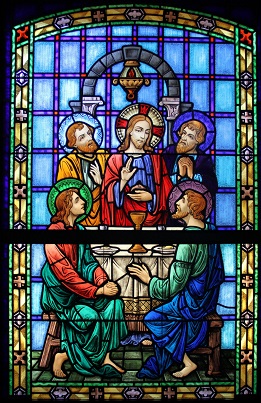
The Holy Eucharist, inasmuch as it is a Sacrifice, is called the Mass.
The Mass was instituted by Jesus Christ at the Last Supper, simultaneously with the Sacrament of the Holy Eucharist. The table of the Supper-room was the fist altar on which the Saviour celebrated the first Mass and distributed the first Communion: it was there that He elevated His Apostles to the dignity of priests of the new Law, saying to them: Do this for a commemoration of me; that is to say, celebrate as I have done the holy sacrifice of the Mass in memory of my Passion. The Mass has three principal parts: the Offertory, the Consecration and the Communion.
The Sacrifice of the Mass is substantially the same as that of Calvary, but differs from it as regards the manner of its immolation
1. It is the same in substance, since there is the same Victim and same principal Priest: Jesus Christ, the priest visible on Calvary, invisible and hidden in the minister at the altar; Jesus Christ, the victim visible on Calvary, invisible and veiled under the Sacrament of the Altar.
2. It differs from it as regards the manner of immolation: for (1) on Calvary Jesus Christ was immolated in a bloody manner; on the altar in an unbloody and mystical manner by the separation of the two species which, being consecrated separately, represent the blood of Jesus shed and separated from His body. In the Mass, Jesus Christ is in the eyes of His Father what He was on the Cross; His wounds and His blood cry for mercy. (2) On the Cross Jesus Christ offered Himself without the ministry of any other priest; on the altar He offers Himself as the principal Priest, but by the ministry of a secondary priest. (3) On the Cross He immolated Himself visibly; on the altar invisibly under the appearances of bread and wine. (4) The Sacrifice of the Cross was offered as the price of our redemption; that of the altar as the means of applying to us that redemption. (5) The Sacrifice of the Cross was offered but once; the Sacrifice of the Mass is offered every day, and shall continue even to the consummation, to the end of time.
What would not have been our happiness, my brethren, if, knowing Jesus Christ as we now know Him, we should have been with the Blessed Virgin, when the Saviour immolated Himself on the cross for the salvation of the world! And this is our happiness every time we devoutly assist at the Sacrifice of the Mass. Let us, therefore, redouble our fervor and devotion at its principal parts, especially at the Elevation; then, with the eyes of faith, let us behold Jesus Christ raised on the cross and spilling His blood in love for us.
Seragesima Sunday
by VP
Posted on Saturday February 19, 2022 at 11:00PM in Sermons
And some seed fell upon a rock. St. Luke VIII. 6
"The sentence which forms the test is sometimes translated "and some fell upon stony ground" that is to say, the good seed scattered by the sower fell in a place that was hard and rocky. The sower in the parable is Jesus Christ, the seed is the word of God. The great Chief Sower, dear friends, as gone away but the good seed, the word of God, the doctrines of holy Church, her precepts, her laws, the rules of morality the standard by which we can tell good deeds from sin - all this good seed is still sown by God's priests, by the divinely appointed and ordained ministers of the word of God. Chiefly this sowing is done in the confessional and in the pulpit. In the confessional the sower scatters the good seed into each heart individually; in the pulpit the seed is scattered over the multitude gathered together. It seems a hard thing to say, but alas! in these days the word of God, the good seed, falls for the most part upon stony ground. The priest exhorts, entreats, persuades, threatens, tells of God's justice, speaks of his mercy, holds up the joys of heaven as a reward, points to the abyss of hell as a punishment; and it all falls upon stony ground. It falls upon the high crags of inaccessible rocks, upon the heard of the hardened sinner, upon the stony, adamantine hearts of those who have given up even the thought of repentance. It falls upon you, wretched man, who come to Mass for the sake of appearances every Sunday; upon you who drag a dead, corpse-like, blackened, devil-marked soul here before the altar of God every Sunday morning, without ever thinking of taking that soul to one of those confessionals which stare you in the face. Yes, the good seed falls upon you, and it falls upon a rock waiting to be calcined by the fires of hell.
The word of God falls upon the pavement, hard and stony as it is. It falls upon the hearts of frivolous, giddy, conceited girls. It falls upon the hearts of blaspheming, drinking, impure young men. It falls upon the hearts of men of business whose only aim is wealth, and of the women who are votaries of fashion; for what are their hearts of all such but a pavement, a thoroughfare, along which pass every evil beast, every low, degrading passion, and every unholy desire? O you girls and young men of this city and this day! You men and women of the world! You who come and hear the sermon, and afterwards go away with a simper on your powdered faces and a sneer upon your lips! You young ladies and young gentlemen " of the period" - to you I say, your hearts are stony ground. The good seed can never grow upon it. Nothing can flourish there but thorns and briers, whose end is to be burnt. O dear brethren, young and old, rich and poor! Tear up the paving-stones, shiver to atoms your pride, your love of the world and its vanities; and when you hear the word of God, when the good seed is scattered, let your heart be not stony, but soft and moist to receive it.
There are others whose hearts are like the pebbly beach. The seed falls there, and then the sea of their pride comes and washes it all away. They know what is said from the pulpit is true, they know the advice in the confessional is good, but they are too proud to change their lives, too proud to own that the priest knows better than they do. They say: why should the church interfere between my wife and me, or between my children and myself? Why should the head of the family be ruled by the clergy and the like? On such as these the word falls, but it falls on stony ground. To all of you, then, the Gospel says this morning, "He that hath ears to hear, let him hear." Open your ears and soften your hearts. Sermons are not for you to criticize; they are for you to profit by, for you to form your lives upon. The words of the priest are the words of God. The seed that he sows is the good seed. Woe to you if your hearts are stony ground! There is a rank growth which is called stone-crop, which clings to walls and stones; there is a week -like, yellow grass that sprouts upon neglected house-tops. What do men do with such plants? They cast them forth into the smouldering weed-fire. And so will God cast into the fire that is never quenched those who receive the word of God on stony ground."
Source: Five minute sermons for Low Mass of the year by the Paulist Fathers, 1886
"Render, therefore, to Caesar the things that are Caesar's, and to God the things that are God's St. Matthew 21.21
by VP
Posted on Sunday October 24, 2021 at 12:00AM in Sermons
"What does our Lord mean by this, my brethren? He seems to say that there are some things which do not belong to God, but to some one else; that God has only partial right in this world which he has created. It would appear to belong partly to Caesar; and who can this Caesar be, who shares the earth with its Creator?
Caesar was the name of the Roman emperor, and our Lord means by Caesar the temporal authority of the state. Now, it must seem absurd to any Catholic, and indeed to any one who believes in God at all, to say that this authority has any right in the world other than that which God has lent to it; so we cannot imagine that our Lord meant anything like that. Nevertheless, there are plenty of people, who do not profess to be atheists, who really maintain not only that the state has rights against him, but even that its right always prevails over his. They say that we must render everything to Caesar, whether God wants it or not; that the law of the state must be obeyed even against the law of God as shown to us by conscience.
These people are really atheists, whether they profess to be or not. The only true God, in whom we believe, will not and cannot resign his right to our obedience or give up his eternal laws. Nay, more, he will and must reserve to himself the right of making new laws if he pleases, and annulling law of the state which are contrary to them. Besides all this, he has also only given to the state a limited sphere in which it can work, and in which only its laws can have any force - that is, he will only allow it to make laws providing for the temporal well-being of its subjects.
This, then, is what belongs to Caesar - that is, to the state. It has the right to claim and enforce our obedience to laws intended for the temporal welfare of its subjects, and to these only, as far as they are not contrary to the eternal law of God, or to others which he may choose to make. And that is all.
When it does not exceed its rights we must give our obedience to it; and we must presume that it does not exceed them unless it is clear that it does. This is what we must render to Caesar.
But how shall we tell that it does exceed its rights? First, by the voice of conscience, when that voice is clear and certain; secondly, by our knowledge of the laws which God himself has made; lastly, by the voice of that other authority which he has put in the world to provide for our spiritual welfare - that is, the Catholic Church. When God speaks to us in either of these ways we must obey him, whether it interferes with Caesar or not; this is what we must render to him.
If the state makes a law commanding us to blaspheme, deny our faith, or commit impurity, we will not obey. Conscience annuls such a law. If the state commands us to do servile work on Sunday its law has no force. We know that God's law is against it. And, lastly, if the state goes outside its sphere, and makes laws regarding things not belonging to its jurisdiction, as the sacraments, we are not bound by such laws. It has no power, for instance, to declare marriage among Christians valid or invalid. The Church has told us this plainly. It is here specially where the state goes out of its province, that it is subject to correction by the church; though it may be in other matters also.
Our Lord, then, means that we should render to Caesar the things that belong to him, not because of any right that he has in himself, but because God has lent it to him; but that we should render to God the things that he has not lent to Caesar, whether Caesar consents or not. Obedience must always be given to God. Give it to him through the state in those things about which he has given the state authority, and in other things without regard to the state; thus shall you render to Caesar the things which are Caesar's, and to God the things that are God's."
Source: Five minute sermons for Low Masses on all Sundays of the year by Paulist Fathers 1886
5 minutes Sermons
by VP
Posted on Sunday October 04, 2020 at 12:00AM in Sermons
SERMON CXXVIII.
Why do you think evil in your hearts ? ST. MATT. ix. 4.
All those, dear brethren, who are trying to lead a holy life have a great horror of external sins. They will not lie, steal, murder, or be guilty of adultery or intemperance. Still, I am afraid a great many of us are awfully careless about internal sins. We forget that not only the sins which we openly commit, but those also which we secretly assent to in our own minds, are offenses against God.
You can see this in today's Gospel. When our Lord said to the sick man, "Thy sins are forgiven thee," the Scribes directly said "within themselves, He blasphemeth"; and although they did not shape this sentence in words, it was accounted to them for sin, as we can see from the reply of Jesus Christ contained in the text.
You see, then, brethren, if you want to keep your conscience clear, you must not only avoid external but even internal sins. Indeed, I think the sins which we commit internally are even more deadly than the external ones. First, because they always precede the open offense ; as our Lord says in another place, " From the heart come forth evil thoughts, murders, adulteries, fornication, thefts, false testimonies, blasphemies." Now, you will see at once that "evil thoughts " come first on the list, by which I think our Lord wishes to intimate that they are the root of all the others.
Again, evil thoughts, whether they are against charity, or against chastity, or against faith - whether they are thoughts of pride, of hatred, or envy, or avaricious thoughts - insomuch as they are concealed from the sight of others, do not cause the same shame to the guilty person as an overt act would. Thus, being the more easily committed, they are the more frequent and the more deadly.
Lastly, dear friends, evil thoughts pollute the mind and heart, and in proportion as they and their darkness enter God and his brightness leave. To indulge in evil thoughts is to defile the stream at its fountain-head and poison all the river below.
Be on your guard, then, dear brethren, against this insidious enemy.
Perhaps evil thoughts against faith may assail you. Cast them out before they have time to enter fully into the mind. Many, better perhaps and holier than you, have in times past become heretics, apostates, enemies of God s church because they did not trample at once upon these beginnings of evil. You may be assaulted by imaginations against holy purity. Stifle them, I beseech you, at once, or they will grow in strength and gain in frequency till they have buried the grace of God, peace of mind, and strength
of intellect in one common and unhallowed grave. You have all doubtless heard of the avalanche which happens in regions where the mountains which rise from the great valley and tower above the nestling valleys are covered with perpetual snow. Perhaps it is a slight puff of air, or the light tread of the mountain goat, or it maybe nothing but the brushing of a bird swing that detaches the ball of snow ; but be that as it may, the particle, once started, rushes down the mountain-side, gathering strength as it hurries on, leaping from one precipice to another, till finally, having swept everything before it, the enormous heap falls upon the peaceful village and buries everything in "a chaos of indistinguishable death." Yet in the beginning that avalanche was but a ball of snow. So it is with evil thoughts against faith, chastity, charity, humility, and all the other virtues. Once let them start and you can never tell in what awful ruin they will end.
Nip evil thoughts, then, in the bud ; and as chief remedies I would say :
1. Fill your mind with good thoughts. A vessel cannot be full of two liquids at the same time. Think of heaven ; think of God, of Jesus, of Mary and her pure spouse, St. Joseph.
2. Remember the eye that sees the secrets of all hearts, and Him who saw the thoughts of the Scribes in the Gospel of today.
3. Remember that you can commit a mortal sin by thought as well as by deed.
Lastly, picture to yourself One ever standing by your side, with wounded hands and pierced heart, " whose name is faithful and true, whose eyes are as a flame of fire, and on his head many diadems ; who is clothed with a garment of blood," and who cries to you night
and day, " Why do ye think evil in your hearts ?"
Source: Five minutes sermons for Low Masses on all Sundays of the Year by the Paulist Fathers, 1886
