The Importance of an exact observance of the holy rubrics
by VP
Posted on Saturday January 03, 2026 at 11:00PM in Books

St. Vincent de Paul said his Mass with such unction and fervor that all could see that his heart spoke through his lips. His modesty, the serenity of his countenance, his whole exterior appearance were calculated to impress the least susceptible of this audience. They observed in his person something so exceptionally noble and at the same time so humble that often some of them were heart to whisper to others: "How well that priest says Mass!"
On the other hand, it would be impossible to calculate the evil done to religion by inattentive, indevout, worldly looking priests, who, while celebrating, seem intent only on accomplishing their task in the shortest possible time, seemingly indifferent as to whether they offer God homage or insult. Seeing them, one would be tempted to ask, with Tertullian: " Sacrificat an insultat?" Let us suppose that St. Basil and the other ministers who served him at the altar in the church of Cesarea had been wont to celebrate Mass in a trivial, unbecoming manner, instead of that imposing solemnity which fills us with an awe-inspiring sense of God's presence in our sanctuaries; could they have so terrified the Emperor Valens as to make him turn pallid and tremble when he advanced toward the altar to present an offering which none would receive at his hands, because he was guilty of heresy?
We have read of a heretic who, after many conferences with a saint and learned religious, had resolved to embrace the true faith; but having observed priests offer the holy sacrifice without respect or devotion, he was so scandalized by their irreverence that he could not be convinced to the truth of Catholic doctrines, or that those priests themselves believed them, and he completely abandoned the idea of entering the true Church.
One of the most infallible means of preventing that routine indifference which too great familiarity with sacred things so often superinduces, of escaping the abysses of evil which it leads to, as well as of fostering in our souls that feeling of religious awe so essential to the most sublime and sacred of all ministries, is to habituate ourselves to an exact observance of the holy rubrics, and to perform as perfectly as possible each one of the prescribed ceremonies. This is of the highest practical importance.
Source: The Sacrifice of the Mass Worthily Celebrated by Rev. Pierre Chaignon S.J., 1897
The doctrines of Godliness are overturned (Saint Basil)
by VP
Posted on Friday January 02, 2026 at 11:51PM in Books
"The doctrines of Godliness are overturned; the rules of the Church are
in confusion; the ambition of the unprincipled seizes upon places of
authority; and the chief seat is now openly proposed as a reward for
impiety; so that he whose blasphemies are the more shocking, is more
eligible for the oversight of the people.
Priestly gravity has perished; there are none left to feed the Lordʼs
flock with knowledge; ambitious men are ever spending, in purposes of
self-indulgence and bribery, possessions which they hold in trust for
the poor. The accurate observation of the canons are no more; there is
no restraint upon sin.
Unbelievers laugh at what they see, and the weak are unsettled; faith is
doubtful, ignorance is poured over their souls, because the
adulterators of the word in wickedness imitate the truth. Religious
people keep silence, but every blaspheming tongue is let loose. Sacred
things are profaned; those of the laity who are sound in faith avoid the
places of worship, as schools of impiety, and raise their hands in
solitude with groans and tears to the Lord in heaven."
Source: St. Basil the Great, The Church of the Fathers, John Henry Newman 1868
Decorum in Church
by VP
Posted on Saturday December 27, 2025 at 11:00PM in Books

When you enter the church, go to your place as quietly as possible. Some people make a great deal of noise in getting in their seats. This is calculated to disturb the congregation, and is exceedingly unbecoming. The church is the temple of the living God, not merely because it is dedicated to his service, but because he dwells therein. The very walls of is are sanctified. It is at all times holy, and is therefore always to be entered with the respect due to the house of God. "The Lord is in his holy temple; let all the earth keep silence before him."
Do not walk up the aisles with an air of pride, such as the people of the world may put on in a ballroom. You may be regarded by the world as rich, intelligent, and accomplished; in the church, you are a poor, blind, and sinful being, and should come in all humility to implore the grace and mercy of God.
It is still more necessary to observe these rules, if you enter the church after Mass has commenced. If you happen to enter during the elevation or communion, kneel by the door, and remain there during the more solemn parts of the Mass; you can afterward retire quietly to your place.
You should assist with attention at the holy Sacrifice. When you are not reading your prayer-book, keep your eyes fixed on the altar on which that adorable Sacrifice is offered, and never gaze around in the church.
Do not leave the church until the priest is retiring from the altar to the sacristy. Those who are the last to come to it, and the first to rush out of the church, seldom derive any benefit from Mass, and often do not hear it properly. The practice of all pious Catholics is, to spend some time after Mass in thanksgiving.
Do not remain standing before the church, as if you had no other object in coming than to see and be seen. If you have time before Mass, say the Rosary, or the Stations of the Cross; employ the time in spiritual reading, or in adoring Jesus Christ in the Blessed Sacrament.
Remember what those who have gone before you in the faith endured that they might be present at the holy Sacrifice of the Mass, and reflect with what attention and piety they must have assisted at it. During the early persecutions, no churches could be built. The divine mysteries could not be celebrated anywhere in public. The faithful were compelled to go into subterranean vaults, called catacombs, where Mass was offered on the tombs of martyrs. The candles we burn on our altars remind us of those days, and of the brightness of faith that made them days, not of mourning, but of joy.
To assist properly at Mass is one of the most important acts of Christian life; and hence the Church declares it to be mortal sin to neglect to hear Mass on Sundays or Holydays.
Source: The Holy Family Manual by the Sisters of Notre Dame, 1883
The True Nature of Christmas
by VP
Posted on Tuesday December 23, 2025 at 11:00PM in Books

Our Lady of Grace, Greensboro, NC
"Today, Christmas is celebrated without Christ in many quarters. Christmas is the season when God became man in the form of a child, and yet, unhappily, in how many homes, because Christ is uninvited, children, too, are no longer welcome. Christmas, like Emmanuel, means "God with us". If we celebrated Christmas without God, we have lost its meaning. If we refuse an inn to God's children as the fruit of marriage, we repeat the sad tale of Bethlehem that refused an inn to Mary and Joseph and the Child.
Christmas means Christ's Mass. But the protestant revolt has denied the true sacrifice of the Mass. It has uprooted His altar and replaced it with a pulpit. There are some who profess to be ministers of Christ and yet deny his Divinity.
The Real Presence of Christ in the Blessed Sacrament has been removed from their altars and the voice of man has usurped His place. The pivot and focal point of the Protestant Church is not the altar but the pulpit. Man's presence has replaced God's presence; private interpretation has taken the place of God's authority.
Christ is sacrificed in the Mass and the Mass is Christ present with us. Take away the tabernacle of God and, since nature abhors a vacuum, the pulpit of man is ushered in to replace it. Remove the Mass, where Christ is offered and adored, and the result is that man is dehumanized whereas he should be super-naturalized. Man exalts himself instead of humbling himself and adoring God. Without God man is not even himself. He is dehumanized. He is less than man. For man, as God made him, is just a little less than the angels.
Christmas today, for the average worldling, means feasting and food, a holiday, with tinsel and tree, and an exchange of gifts. It is externalized and made pagan in its concept.
It should mean attendance at Mass - at Christ's Mass on Christmas day. It should be a day of great dignity, of rejoicing as evidenced in a temperate use of food and drink and a meeting of loved ones under the star and spirit of Bethlehem. It should mean not so much a receiving as a giving to Christ's poor in imitation of God who gave Himself to the poor in the greatest gifts - His only-begotten Son.
(...)
In thinking of Christmas we always conjure up in our mind's eye the happy days of childhood, the memory of our parents who may have passed on to God's Judgment, and of our early home - all these are most joyous recollections. Certainly Advent should not be observed as a lugubrious or melancholy manner. Penance is a joy when it is performed for God. When imposed upon us for a selfish motive it is a drudgery.
These Advent days, then, can be most joyful, our recollection of former years can be most happy if we dedicate them to God. In simple terms, we can be happiest when all things are in harmony and in their proper place. This is the definition of health. This is the understanding of peace - the "tranquility of order."
Source: Preface of Spiritual Steps to Christmas, Very Rev. Msgr. Aloysius Coogan, MA 1953
The Condemnation of Priests
by VP
Posted on Sunday November 30, 2025 at 11:00PM in Books
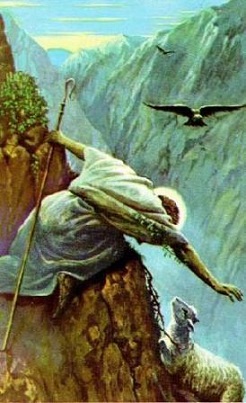
"Every tree that bringeth not forth good fruit shall be cut down, and shall be cast into the fire. Wherefore by their fruits you shall know them" St. Martt. VII. 19,20
1. Every tree that bringeth not forth good fruit: Our Saviour had spoken of false Prophets, and in their person had signified wicked Priests : He had enjoined His disciples to avoid them, but He had not enjoined them to punish them. He fills them with fear, threatening them with the punishment of God (says St. Chrysostom). A wicked Priest has, indeed, need of threats rather than of promises, and for his amendment he has need to think of the former rather than of the latter. And, did he but reflect on the tremendous truth which is here inculcated — that is to say, that a Priest may be condemned for failing to produce good fruit — then surely he would never bring forth those many evil fruits which may be traced to him. He would shrink from incurring that dreadful curse, " You shall bear the iniquity of the sanctuary . . . you shall bear the sins of your priesthood" (Numb, xviii. 1).
If we are branches of that great Vine, which is Jesus Christ, we ought to remember His word, " Every branch in Me that beareth not fruit He will take away;" and again, "If any one abide not in Me, he shall be cast forth as a branch, and shall wither, and they shall gather him up, and cast him into the fire, and he burneth " (St. John xv. 2, 6). Let us, then, fear the fulfillment of so terrible a menace ; let us fear the teeth of the dragon (says St. Bernard); let us fear the belly of hell, the roaring of fierce beasts that stand ready to devour, the worm that ever gnaws, the fire that always burns, the smoke, the brimstone, the whirlwind, and the exterior darkness. It may be that our death is near, and that " the axe is already laid to the root of the tree " (St. Matt. iii. 10) ; it may be the Watcher and the Holy One has already cried aloud from heaven, " Cut down the tree " (Dan. iv. 1 1 ). Whither shall we then flee from the wrath of the Lamb ? Why do we not now by penance forestall this fatal stroke ?"
2. Shall be cut down. What terrible words are these ! They point to separation from the heavenly kingdom, which separation is incomparably more terrible than eternal fire ; although (as St. Chrysostom says) many fear hell more than they fear the loss of heaven. But the loss of a kingdom, and that the kingdom of God, will be most terrible for Priests, who have held the keys of it, who have opened it to others, and who will hear from the lips of devils that they have lost it, as the devils have lost it, without hope of recovery : " Thou also art wounded as well as we, thou art become like unto us" (Is. xiv. 10). — " Shall be cut down." They shall be separated from the Eternal Father Who had communicated to them immense power, Who had confided to them His Son, Who had made them Ministers of His mercies, but Who now says, " I will hide My face from them, and they shall be devoured " (Deut. xxxi. 17). — " Shall be cut down. " What an awful punishment is that of Priests — to be separated from Christ, to become the object of His hatred, and to hate Him and curse Him, through all eternity, after having been so familiarly associated with Him — after having called Him down so many times from heaven, held Him in their hands, taken Him for food, dispensed Him to the Faithful ! The punishment of ten thousand hells could not equal this (says St. Chrysostom). — "Shall be cut down". How terrible for Priests to be separated for all eternity from the Holy Spirit, by Whom they were anointed, illuminated, sanctified, and made the instruments of diffusing Him on Whom the Angels, whose name and office they have borne, "desire to look!" (i Pet. i. 12). — "Shall be cut down." Surely, nothing ought to be so terrible to Priests who still retain their faith as the thought of losing for all eternity the sight, the possession, the enjoyment of the Blessed Trinity, with Whom they have been so closely associated on earth.
3. Shall be cast into the fire. The fire which is kindled by God's wrath is "a fire full of wisdom;" that is, it punishes each one according to the number and heinousness of his sins. Hence the sins of Priests, which are most heinous — because of their contempt of Divine light, their ingratitude for the Divine benefits, and because of the fatal consequences of such sins — will bring upon them a more severe and intense suffering than those of any others. Supreme is God's indignation against His reprobate Ministers, and therefore against them in an especial manner is " a fire kindled in His wrath, which shall burn even to the lower heir' (Deut. xxxii. 22). The breath of Almighty God, which, when breathed upon them, gave His Priests power to remit sins, will then be "as a torrent of brimstone" to punish their iniquity (Is. xxx. 33). Let us consider that the devils have already prepared a dwelling for us, and desire to see us precipitated into that furnace of fire ; " for Topheth is prepared from yesterday, deep and wide ; the nourishment thereof is fire and much wood." (Ibid.) What anguish for Priests to see themselves changed from shining stars into firebrands of hell !
O Jesus, Author of the Priesthood, and Supreme High Priest, abandon not Thy unworthy Minister. Convert me and save me.
" Deliver, O God, my soul from the sword, my only one from the hand of the dog." — Ps. xxi. 21.
" Which of you can dwell with devouring fire ? Which of you shall dwell with everlasting burnings ? " — Is, xxxiii. 14.
Source: 7 week after Pentecost Meditations for the use of the clergy : for every day in the year. On the Gospels for the Sundays, Volume 3 (Msgr. Scotti, Archbishop of Thessalonica)
Prayer for Priests Who Have Become Unfaithful to Their Vocation
Divine Savior Jesus Christ, Thou are the
Good Shepherd who gives His life for His sheep. Oh, be in a very
special way the Good Shepherd of those poor lost priests who are also
appointed by Thee to be leaders of Thy people, but who have broken the
oath of their holy ordination and have become unfaithful to their
exalted calling. Bestow upon these poorest of the poor the very fullness
of that pastoral solicitude with which Thou dost so faithfully seek the
sheep that are lost! Touch their hearts with the irresistible ray of
grace which emanates from Thine all-merciful love! Enlighten their minds
and strengthen their wills, that they may turn away from all sin and
error and come back to Thy holy altar and to Thy people. O most
compassionate Savior! Remember that Thou didst once redeem the souls of
Thine erring priests with Thy Precious Blood and in infinite
preferential love didst impress upon them the indelible character of the
priesthood. Put wholly to shame those miserable helpers of Satan who
lay snares for the virtue of priests and endanger the holy ideal of the
priesthood. Most graciously accept our prayers and sacrifices for poor
priests who have gone astray and hear our earnest petition. Amen
obtain for us holy priests.
St. John-Mary Vianney, model of sacerdotal holiness,
obtain for us holy priests.
St. Francis Xavier, patron of missionary priests,
obtain for us holy priests.
St. Therese of the Child-Jesus and of the Holy Face, victim offered for the sanctification of priests,
obtain for us holy priests.
Saints and Servants of God, obtain for us holy priests.
Imprimatur - Bishop John F. Null (April 18, 1948)
Source: Cure d'Ars Prayer Group
The preacher who likes applause
by VP
Posted on Sunday November 23, 2025 at 12:42AM in Books
"What is the end of a preacher? Is it to please? To gain applause? To obtain promotion? Or is it to give men life; to make them " Sorrowful unto penance"?
I am of opinion, writes St. Francis of Sales, that a preacher ought not to aim at the gratification of the ear, which is the result of artifice, of worldly elegance, of merely ornamental oratory. He who desires to please his audience says only "pleasant things". The craving for applause blinds him to the truth. He relies almost exclusively on the persuasive words of human wisdom, he makes little or no account of the Word of God, which ought to be the chief source of sacred eloquence, and he speaks in a style more suited to the platform than to the pulpit, more profane than sacred.
Hence there arises amongst the people and even amongst the clergy, a vitiated taste in respect to the Word of God, which gives scandal to the pious and no profit to the incredulous; for these latter, although they sometimes come to the church, especially if attracted by such high-sounding words as Progress, Fatherland, Modern Science, and loudly applaud the preacher, go forth from it no better than they entered."
Source: The Priest of Today, Rev. Thomas O'Donnell 1911 page 226
The Holy Mass
by VP
Posted on Saturday November 08, 2025 at 11:00PM in Books

The daily celebration of the Mass over the whole Christian world fulfills the prophecy contained in the first chapter of Malachias V.11.
"For from the rising of the sun, even to the going down, My Name is great among the Gentiles" (i.e., among those who were to form the present Christian world); "and in every place there is sacrifice, and there is offered to My Name a clean oblation; for My Name is great among the Gentiles, saith the Lord of Hosts."
The Mass is this fore-told sacrifice, and clean oblation. It is offered from the rising to the going down of the sun; and it is the self-same sacrifice as that offered once in a bloody manner upon the Cross, but now in an unbloody manner on every Catholic altar. The self-same Christ is at once the High-Priest and the Victim.
The Sacrifice of the Mass is not inconsistent with the truths that, firstly, there is but One Sacrifice; secondly, that the merits of the Sacrifice of the Cross are all-sufficient; and, thirdly, that Christ, having once died, can do so no more. The Mass and the Oblation on Calvary are one, because there is the same Divine victim, Jesus Christ, in each case. It is not held to create new merits by adding to those gained on the Cross, but only apply daily those so gained.
Christ does not die on the Altar, yet remains a perfect victim. Death is not essential for a sacrifice, as we learn by the old anti-type of the offering of Mass, when the Scape-Goat, being offered up as a sacrifice to God, was afterwards allowed to go free into the wilderness. (Lev. xvi, 10.)
Sacrifice has always been the one supreme from of Divine worship, and nothing more perfectly shows forth the death of the Lord, till he come (i. Cor. xi, 26), and so well obeys the Divine injunction on this matter, as the offering of the Holy Mass.
The Holy Eucharist is at the same time a sacrifice in itself and also a memorial of the Sacrifice of Calvary. The Sacrifice of the Mass does not lose its rightful claim to be a sacrifice because it is at the same time commemorative of another sacrifice. "The action of the Last Supper looked forward to that action on Calvary, as the action of the Holy Mass looks backwards upon it. As the shadow is cast by the rising sun towards the west, and as the shadow is cast by the setting sun towards the east, so the Holy Mass is, I may say, the shadow of Calvary, but it is also the reality: (Cardinal Manning - Glories of the Sacred Heart).
The words of the Mass were not primarily intended to be recited or even followed by the people. The Congregation only assist at the action, priests alone being set apart to sacrifice by the reception of the powers conferred in the Sacrament of Holy Orders; and non-Catholics, if uninformed, are naturally surprised to find a priest celebrating Mass recite much of it in silence. As a proof of the former proposition, there is a portion of the Mass still called the Secret; and in ancient times a screen was drawn between the priest and the laity, so that the latter were not permitted even to see the act, yet were considered as duly participating in all its merits by their mere presence. Today the laity are rather recommended to follow the words, and these are set down in all their prayer-books in English and Latin; yet every one assisting at Mass is free to use any private form of prayer and meditation.
We have strong confirmation of the antiquity of the Mass in the writings of the pagan Romans, whose calumnies show that the Mass was always the one principal service of the early Christians. These writers refer to the slanderous stories of their times, that the Christians killed an infant and ate its flesh at their religious meetings. Such misrepresentations were very common, and prove that the primitive Christians did sacrifice and receive the Body and Blood of our Lord in their Holy Communions. Those pagan tales with their half-truths are evidently founded on the celebration of the Holy Mass wherein Christ is sacrificed.
The words of the Mass are almost solely derived from Scripture, and could the Catholic Church more practically and more publicly venerate its Divine inspiration than in this full use of the Bible in its greatest act of worship?
Source: Guide to a Catholic Church: for non-Catholic Visitors, by Fox, WL and O'Gorman, RA. 1904
Great Merit is Gained by offering Holy Mass
by VP
Posted on Sunday July 20, 2025 at 12:00AM in Books

Father Tyler Sparrow, Holy Name of Jesus Cathedral, Raleigh NC.
"Bear in mind that Holy Mass is the True and Supreme Sacrifice of the Christian religion and that all those who would assist at it correctly should join in offering it to the most high God. The Mass to the Christian is not merely a form of prayer; it is an act of worship and a sacrifice; for all who hear Mass offer the Divine Oblation together with the priest.
First of all, there is the great High Priest, the Chief Sacrificer, Christ, who Himself offers every Mass that is said to His heavenly Father. Then there is the officiating priest, who immolates the Divine Victim. Thirdly, there are the Faithful, who, present at the Holy Sacrifice, have also the power of offering it - and in fact, sometimes do so with greater profit that the priest himself. Fourthly, there are those who either "pay for the Mass" (ie. give the priest a stipend for offering it), or provide something necessary for celebrating it, such as the chalice of the vestments. Lastly, those too must be included who, unable to assist in person, unite themselves in spirit to the priest and join with him in his sacrificial act while remaining in their own homes. They also, since they participate in a certain measure in offering the Holy Sacrifice, participate in its fruits and may, if they so will, assign to others the benefit of those fruits.
Ponder well these truths, for they contain valuable instruction and comfort."
Source: The Incredible Catholic Mass by Fr. Martin Von Cochem
Priests and Reparation
by VP
Posted on Sunday July 13, 2025 at 12:00AM in Books
"George Goyau, when giving notice of the forthcoming publication of a book entitled Lettres de Prêtres aux Armées ( Priests' Letters to the Armies), calls the Holy Mass "the greatest event in the history of humanity," and he adds:
"Daily, the priest brings the effective operation of our Divine Redeemer to bear upon the destinies of the human family. By a supreme act he interweaves the weft of our daily sins with the Divine Ransom; above the chaos of both open and hidden faults he raises the Victim. Our human history is continually being permeated with this Divine sacrifice, a sacrifice both multiple and one. To many this sacred rite is a mere commonplace thing. Nevertheless, through the agency of the priest, they are present at the recurrence of the decisive moment when our guilty world, so justly disinherited, was suddenly put on the way to the plenitude of the supernatural life by the two Mysteries of the Incarnation and the Redemption. God has chosen the priest to perpetuate these two Mysteries, and no human catastrophe can draw him away from this duty, which from the day of his ordination is one, for eternity, with the very life of his soul."
We could not express more briefly the grandeur and the responsibility of the priesthood. What is the priest? One who carries Christ on through the ages. But Jesus Christ came upon earth to give, to His Eternal Father, a Pontiff, a priest who could adequately make Reparation and Expiation. The priest, therefore, who is charged to prolong, as it were, the role of Christ, ought to imitate Him by offering himself with Christ as an evidence of adoration and expiation. The priest who consecrates will therefore be a victim with Jesus. He does not understand his whole ministry if he confines it to the distribution of the Body of Christ, of the word of God, of the forgiveness of Christ, and does not at the same time accept the role of the victim like his Master, of whom he takes the place and perpetuates the work.
All the years Jesus spent upon earth He was a victim, but He was not satisfied with this, for He had determined to prolong His Sacrifice by the agency of His priests. This He accomplished at the Last Supper, on the eve of His death; hence the Mass sets forth, without the shedding of blood, the immolation of Christ bleeding upon the Cross. Uplifted on Golgotha, Christ between Heaven and earth will be a shield interposed between God's justice and man's sin.
Jesus' mediation will be accepted by God, because of His wounds and His precious blood poured forth. But Jesus is is likewise the shield between Heaven and earth, between God's justice and our sins in every Mass. Each "elevation" compensates for our manifold scandals; each uplifting of the Hose atones for some decadence of ours, for our falls into sin, because the virtue of His blood and wounds lasts on. There are not two sacrifices, but this is the same as that of the Cross, though set forth differently. This is the formal teaching of the Council of Trent.
How many of the faithful, who hear Mass, do not seem to have any knowledge of this adorable Mystery! How many use prayers which have no reference whatever to the Mass, though perhaps appropriate for other occasions! How many know the term "Holy Sacrifice," without any conception of the exact truth and stupendous reality with which it corresponds!"
Source: The Ideal of Reparation by Fr. Raoul Plus, S.J. 1852
O Holy Spirit, Creator, be propitious to the Catholic Church; and by Thy heavenly power make it strong and secure against the attacks of its enemies; and renew in charity and grace the spirit of Thy servants, whom Thou has anointed, that they may glorify Thee and the Father and His Only-begotten Son, Jesus Christ, our Lord. amen.
Manual of prayers to the Holy Ghost by Very Rev. Fr. Felix of Jesus 1941
St. Vincent of Lerin's description of a Catholic, and the condition of such as are for novelties in Faith.
by VP
Posted on Saturday October 29, 2022 at 12:36AM in Books
The Catechism of the Council of Trent
"The more learned the person is, who is the author of error, the greater are the people's temptations.
He only is a true, genuine Catholic, who loves the word of God and his Church, the mystical body of Christ, above all other considerations in the world; who values neither the authority, nor love, nor wit, nor eloquence, nor philosophy of any man breathing, in comparison of his divine Religion and the faith of the Catholic Church; upon all these things he looks down with contempt, and fixed and immovable in the faith, resolves to believe nothing upon the authority of one single man, but what he finds anciently and universally to have been believed by the Catholic Church; and whatever upstart, unheard of doctrine he finds to be secretly introduced, in opposition to all the faithful, let him look upon that as matter of temptation, rather than an article of faith: and this advice of mine will then especially, appear more reasonable, when he reflects upon that of St. Paul, in his first epistle to the Corinthians, where he declares, That there must be also heresies: that they who are approved, may be made manifest among you 1 Cor. xi. 19. As if he should have said, this is the reason why God does not interpose miraculously, and destroy heresies in a moment, that the approved may be made manifest, that is, that every firm, faithful, and constant lover of the Catholic faith, under such a temptation, might be a more shining example to the world, of the true power of godliness.
And in truth, when any new born heresy first shews its head in the Church, the good grain is then soon discovered by its weight, and the chaff by its lightness: and then upon the sifting temptation, that chaff submits to the first wind, which had no solidity to secure it on the floor. For some fly off immediately, others are shocked only, and turn occasionalists, being afraid of perishing out of the Church, and yet, at the same tie, ashamed of returning perfectly into it, wounded, half dead, and half alive, and just in the condition of those men, who have taken such a dose of poison, as will neither destroy nor be digested, neither let them die or live.
Pitiable condition? For with what whirlwinds, what tides of restless passion are such wretches agitated! One while, they are transported with every wind of doctrine; another while, they return and fall foul upon themselves, and, like conflicting waves, are dashed to pieces by their own contrary motions; this moment, they are confident in uncertainties, and the moment after as irrationally fearful, where no fear exists; unknowing where to go, where to return, what to desire, what to deprecate; what to receive, and what to relinquish.
Nevertheless, this unhappy vibration and instability of mind, points to its own cure, if men would but wisely consider the merciful design of Providence, in this very affliction. For therefore, whilst without the haven of the Catholic faith, are they thus afflicted, thus tossed and shattered almost to pieces with inward storms of clashing thoughts, that by this restless posture of mind, being made sensible of the danger they are in, and their distance from salvation, they might take down those sails of pride and vanity, which they have unhappily spread before every gust of heresy, and make all the sale they can into the safe and peaceable harbour of their holy mother, the Catholic Church; and there, being sea sick, as it were, with errors, discharge these foul and bitter waters, to make room for the pure waters of life. There they may unlearn well, all they have learned ill, and get a right notion of all those doctrines of the church they are capable of understanding, and believe those that surpass all understanding."
